Last year, we actually quite liked not going to the Salone. It saves a lot of time and work. We have too little of the former because we have too much of the latter, so logically it makes more sense not to go. That’s also because we increasingly receive guests and clients at our own location in Eindhoven.
But there is also such a thing as tradition and collaboration. Rossana Orlandi was fine with our absence beforehand last year, but as the year went on it became clear that missing the shared Salone experience was a pity. As often stated, that is the core of our presence at the Salone: it is a socio-economic event where we meet many clients and friends, and sales are actually secondary.
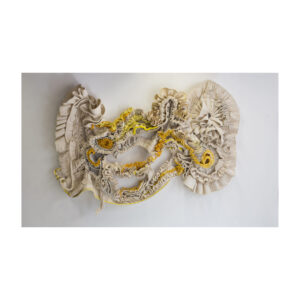
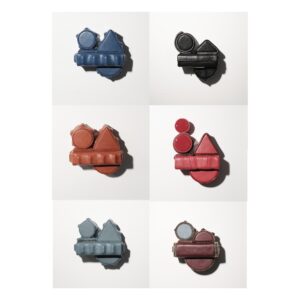
As every year, we’re negotiating with Rossana about what we will and won’t show, but it’s limited to what’s new, so there isn’t too much to choose from. This year we present the Eindhoven–Dakar collection, the drawer cabinet project that was started earlier, and “environmental service” stools and tables. We’re working at full speed to finish the final objects. As always, they will be ready just in time, so that we can arrive on the top floor at Rossana Orlandi’s with healthy stress in our veins—tired and slightly nervous about how the work will be received.
As always, we also want to sell accessories. Without the dynamics of small items, we fear it might become a slow, overly serious experience. However, we don’t have many small items this year (the Eindhoven–Dakar accessories are more or less sold out and will only be available again later). To still present something new, we’ll be selling old wine in new bottles. For this presentation, we are making an old drawer sales counter, which will also be for sale, where we will display and sell various small products.
The drawer objects:

No. 1 – Drawer Cabinet (presented for DDW 2025)
A large, solid piece of furniture with a layout similar to a classic cabinet (three drawers below and two doors above). The cabinet is made from drawers used in unconventional ways: a drawer can function as a door or a side panel, but in this case also as a drawer. The structure is made of oak, with brass hinges and fittings. The whole—cabinet, brown drawers, oak, and brass—has an “improper classical technical character.”

No. 2 – Wall-mounted Drawer Cabinet (presented for DDW 2025)
The Wall-mounted Drawer Cabinet is the smallest object in the series. It is a composition of drawers not used as drawers. It can be opened and closed but is otherwise barely functional—more a work of art than a cabinet.
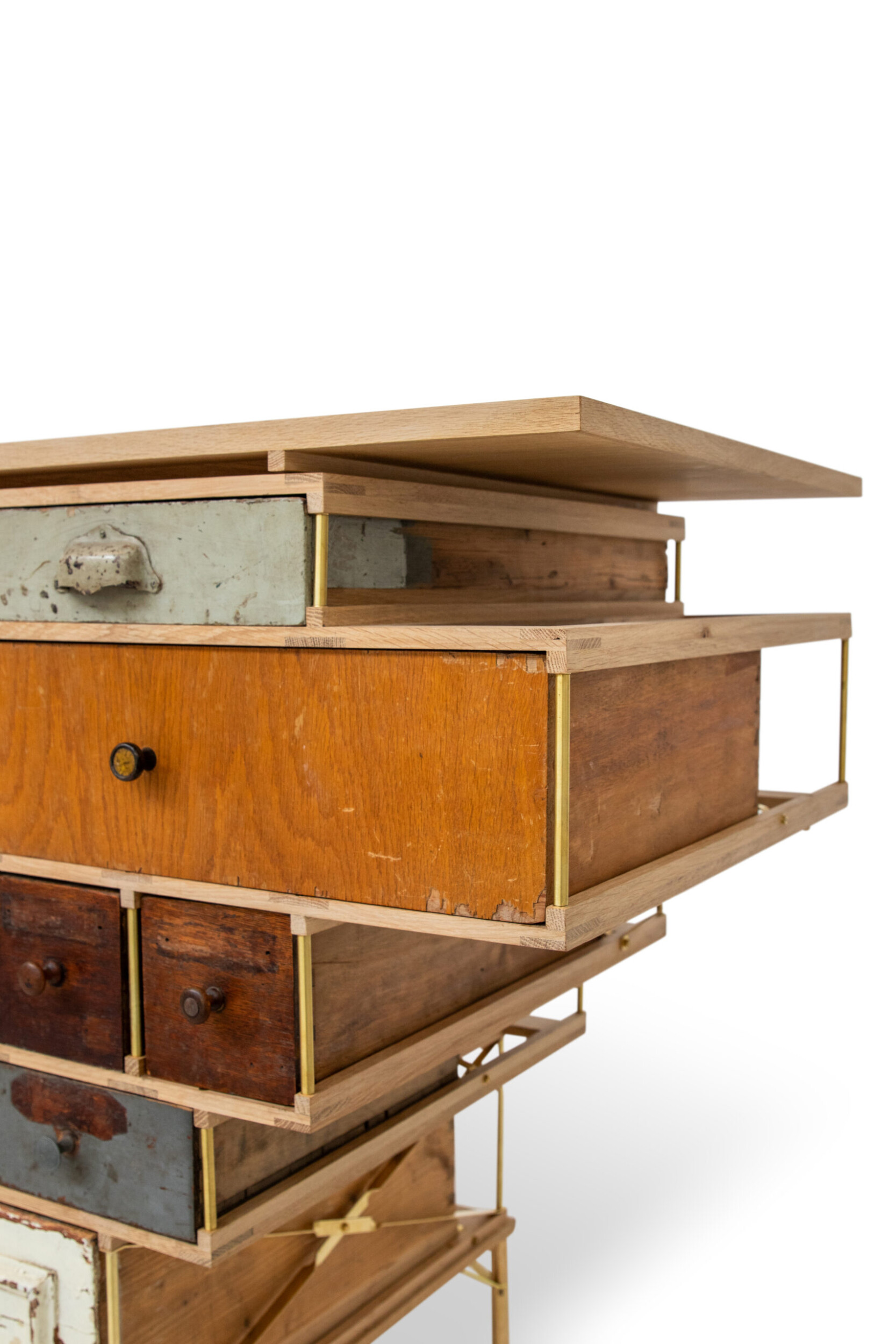
No. 3 – Drawer Dresser
Of the series, this is the most straightforward object, as it is essentially a normal dresser with drawers that function as drawers. One could argue that this simplicity allows the variety of drawers to stand out best, and that the concept of reusing discarded drawers is served most effectively in this form. In this old drawer dresser, it all comes down to detailing and composition.

No. 4 – Drawer Door
A sliding wall cabinet made of drawers. Placed in a wall opening, it becomes both an object and part of the architecture, as well as a drawer cabinet. As far as we know, nothing like this has been made before, so no one is waiting for it. But perhaps someone has a hole in the wall they don’t know what to do with, or finds the cabinet so beautiful that they create an opening for it—or simply use it without an actual passage. In any case, in a world where many believe everything has already been conceived, done, and made, we are simply continuing our work.

No. 5 – Drawer Counter
The counter is an example of the company’s ability to puzzle with existing windows, doors, and drawers. The process starts with an idea, followed by a design on paper. Designing consists of setting rules and then, where necessary, bending them in a thoughtful way. The beauty lies in the dimensional adjustments—technically refining drawers or compartments—and in how everything is assembled. It requires maximum concentration from everyone involved throughout the entire process, because the puzzle pieces are existing elements, only supplemented or adapted where needed. A small mistake in inventory or measurement can completely disrupt the whole.
Environmental Service Table & Stool:


This post is also available in:
« Back to blog